


The Curiosity Approach, which prioritizes child-led, play-based learning to spark creativity and exploration, aligns seamlessly with sensory-friendly strategies. Below are five carefully curated, sensory-friendly ideas rooted in the Curiosity Approach, designed to develop engagement, creativity, and learning for students with special needs. Each idea is grounded in evidence-based practice, drawing on research in sensory processing and autism education, while incorporating innovative elements to inspire educators.
1. Treasure Baskets for Sensory Exploration
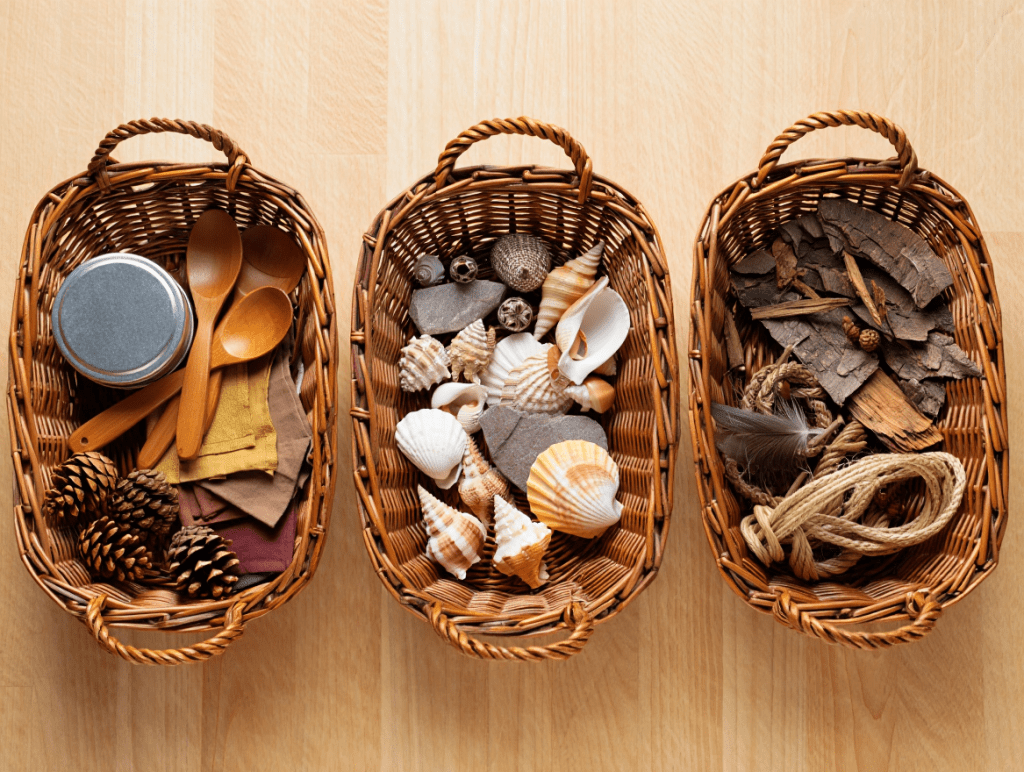
Concept: Treasure baskets, a cornerstone of the Curiosity Approach, involve collections of natural and everyday objects (e.g., wooden spoons, pinecones, fabric swatches) that invite tactile and visual exploration. For students with autism, these baskets can be tailored to sensory preferences, offering a calming, self-directed way to engage curiosity.
Implementation:
- Create baskets with varied textures (smooth stones, soft felt, crinkly paper) to cater to sensory-seeking or sensory-avoidant students.
- Include items with muted colors or low visual stimulation to prevent overwhelm, as supported by sensory integration research (Ayres, 1979).
- Allow students to explore at their own pace, developing autonomy and curiosity, as child-led play enhances engagement (Whitebread et al., 2017).
- Example: A basket with seashells, a soft brush, and a small mirror encourages tactile exploration and self-discovery.
Innovation: Incorporate a “sensory choice board” with visual cues, allowing non-verbal students to select preferred items, promoting agency and communication.
Impact: Research shows sensory play reduces anxiety and improves focus in autistic learners (Leekam et al., 2007), while the open-ended nature sparks curiosity and creativity.

2. Nature-Inspired Loose Parts Play
Concept: Loose parts play, a key Curiosity Approach strategy, uses open-ended materials (e.g., sticks, leaves, pebbles) to encourage imaginative creation. For special needs students, nature-inspired loose parts provide grounding sensory input and opportunities for flexible exploration.
Implementation:
- Set up a designated area with natural materials like bark, feathers, and smooth twigs, ensuring items are safe and sensory-friendly.
- Offer structured prompts (e.g., “What can you build?”) to guide students who thrive on predictability, as structure aids autistic learners (Mesibov & Shea, 2010).
- Allow collaborative or solo play to suit individual comfort levels, promoting social skills or independent creativity.
- Example: Students might arrange leaves and stones into patterns, engaging fine motor skills and imagination.
Innovation: Introduce a “nature soundscape” (e.g., recorded water sounds or a white noise machine) to enhance sensory calm and deepen engagement, aligning with studies on auditory sensory support (Schafer et al., 2013).
Impact: Loose parts play fosters problem-solving and creativity, with natural elements shown to reduce stress in children with autism (Kaplan & Kaplan, 1989).

3. Sensory Storytelling Corners
Concept: Storytelling through sensory-rich props aligns with the Curiosity Approach’s emphasis on imagination. For students with special needs, sensory storytelling corners provide a low-pressure, immersive environment to explore narratives and build communication skills.
Implementation:
- Create a cozy corner with soft textures (e.g., cushions, blankets) and dimmable lighting to create a calming sensory space.
- Use props like scented fabric squares, textured puppets, or sound-making objects to bring stories to life, catering to sensory preferences.
- Encourage students to co-create stories by choosing props, supporting expressive language development (Ganz, 2007).
- Example: A story about a forest might include pine-scented fabric, a plush animal, and a small bell to mimic sounds.
Innovation: Integrate augmentative communication tools (e.g., picture exchange systems) into storytelling, enabling non-verbal students to participate actively, inspired by inclusive communication strategies (Beukelman & Mirenda, 2013).
Impact: Sensory storytelling enhances narrative comprehension and emotional engagement, critical for autistic learners’ social-emotional growth (Quill, 1997).
4. Calming Sensory Exploration Stations
Concept: The Curiosity Approach encourages child-led discovery, which can be adapted into sensory exploration stations—dedicated spaces where students with special needs can engage with calming, curiosity-driven activities tailored to their sensory needs.
Implementation:
- Design stations with specific sensory foci: tactile (e.g., water beads), auditory (e.g., rain sticks), or visual (e.g., lava lamps with slow-moving bubbles).
- Use visual schedules to guide transitions between stations, supporting predictability for autistic students (Hume et al., 2014).
- Allow students to choose their station, fostering autonomy and curiosity in a structured way.
- Example: A tactile station with kinetic sand and molds invites exploration while maintaining a calming focus.
Innovation: Incorporate wearable sensory tools (e.g., weighted vests or fidget bands) to enhance comfort during exploration, drawing on proprioceptive input research (Blanche et al., 2012).
Impact: Sensory stations reduce sensory overload and promote self-regulation, enabling sustained engagement and curiosity (Dunn, 2007).
5. Collaborative Curiosity Murals
Concept: Collaborative art projects, like murals, align with the Curiosity Approach’s focus on creativity and community. For students with autism, sensory-friendly murals provide a shared, low-pressure creative outlet that respects individual sensory needs.
Implementation:
- Use large butcher paper or canvas with sensory-friendly materials (e.g., washable paints, textured rollers, or sponge brushes) to accommodate sensory sensitivities.
- Allow students to contribute at their own pace, using hand-over-hand guidance if needed for motor support, as motor challenges are common in autism (Fournier et al., 2010).
- Incorporate open-ended prompts like “What does your favorite place look like?” to spark curiosity and imagination.
- Example: Students add handprints, splashes, or textured patterns to a group mural, creating a collective story.
Innovation: Integrate glow-in-the-dark or UV-reactive paints for a novel sensory experience, activated under safe, low-light conditions to captivate attention without overwhelm.
Impact: Collaborative art fosters social interaction and creative expression, with sensory-adapted materials reducing barriers for autistic learners (Martin, 2009).


Conclusion
These five sensory-friendly ideas, rooted in the Curiosity Approach, blend evidence-based sensory integration strategies with innovative, child-led practices to create inclusive, engaging learning experiences for students with special needs. By prioritizing autonomy, sensory comfort, and creativity, teachers can develop curiosity and growth in autistic learners, transforming classrooms into spaces of wonder and discovery. For further guidance on implementing these strategies, consult resources like the National Autistic Society or sensory integration texts by Ayres and Dunn.
References (for context, not exhaustive):
- Ayres, A. J. (1979). Sensory Integration and the Child.
- Whitebread, D., et al. (2017). The Importance of Play in Early Childhood.
- Leekam, S. R., et al. (2007). Sensory Processing in Autism. Journal of Autism and Developmental Disorders.
- Mesibov, G. B., & Shea, V. (2010). The TEACCH Approach to Autism Spectrum Disorders.
- Schafer, E. C., et al. (2013). Auditory Interventions for Children with Autism.
- Kaplan, R., & Kaplan, S. (1989). The Experience of Nature.
- Ganz, J. B. (2007). Classroom-Based Strategies for Children with Autism.
- Beukelman, D. R., & Mirenda, P. (2013). Augmentative and Alternative Communication.
- Quill, K. A. (1997). Instructional Considerations for Young Children with Autism.
- Hume, K., et al. (2014). Visual Supports for Students with Autism. Autism Research.
- Blanche, E. I., et al. (2012). Sensory Processing and Motor Performance in Autism.
- Dunn, W. (2007). Sensory Profile: User’s Manual. (Our Digital Version)
- Fournier, K. A., et al. (2010). Motor Coordination in Autism Spectrum Disorders.
- Martin, N. (2009). Art as an Early Intervention Tool for Children with Autism.

